What's the real difference between 'accessible' and 'ADA compliant'?
This is probably the first thing folks ask me, and it's a good one. When we talk about 'ADA compliant,' we're usually referring to the Americans with Disabilities Act, which sets out specific design standards for public and commercial spaces. Think about the bathrooms you see in restaurants or stores – those are built to ADA. They have very strict rules about things like grab bar placement, toilet height, and clear floor space. For your home, 'accessible' is usually the goal. It means designing a bathroom that works for someone with mobility challenges, but it doesn't have to meet every single ADA spec. We can tailor it to *your* needs, *your* space, and *your* budget, which is often a lot more practical and comfortable than trying to jam a public restroom design into your house. Sometimes, it's just about making things easier, not about meeting a federal guideline.
Do I really need a full bathroom remodel, or can I just make a few changes?
It really depends on what you're starting with and what kind of accessibility you need. Sometimes, a few smart changes can make a huge difference. Swapping out a standard toilet for a comfort-height model, adding grab bars around the toilet and in the shower, or even just improving the lighting can be big wins. If you've got a step-over tub, converting it to a low-threshold or roll-in shower is often the most impactful change for someone using a walker or wheelchair. But if your bathroom is really tight, or if you need things like wider doorways or a completely reconfigured layout for a wheelchair turning radius, then yeah, you're probably looking at a more extensive remodel. We'll come out, take a look, and give you an honest assessment of what's possible without tearing everything out.
What's the deal with grab bars? Where do they even go?
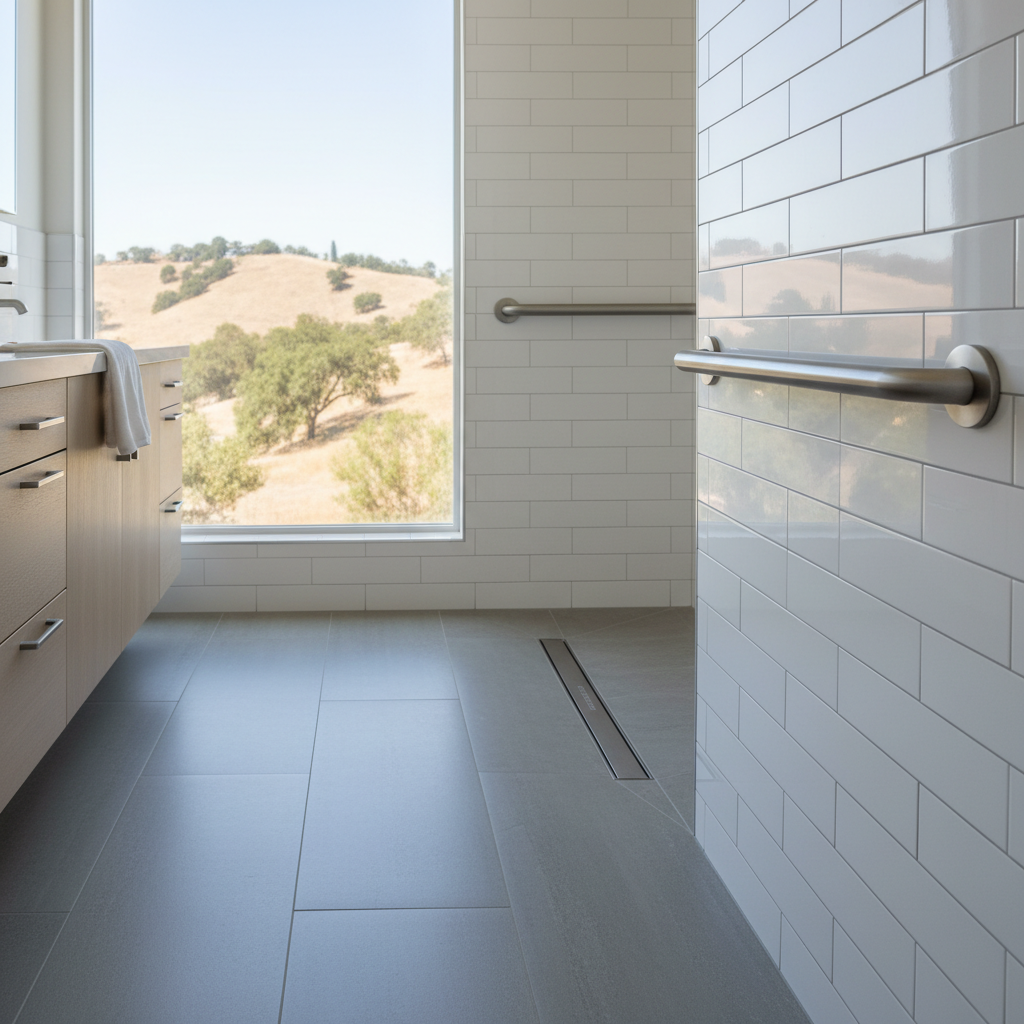
Grab bars are one of those things that seem simple, but placement is everything. You don't just stick 'em anywhere. For a toilet, you typically want one on the wall behind it and one on the side wall, or a flip-up bar if there's no side wall. In the shower, you'll want them near the entry, on the back wall, and possibly on the side wall where you stand or sit. The key is to put them where they'll actually be used for support when transferring or maintaining balance. We always consider the specific user's height and mobility. And please, for the love of all that's holy, make sure they're anchored into studs or with proper blocking. I've seen too many DIY jobs where a grab bar pulls right out of the drywall – that's not just unhelpful, it's dangerous. We always make sure they're rock solid.
Are roll-in showers really better than low-threshold showers?
For someone in a wheelchair, a roll-in shower is almost always the way to go. It means there's no curb at all, so a wheelchair can roll right in without any obstruction. This is ideal for independence. A low-threshold shower, on the other hand, still has a small curb, maybe an inch or two high. This can be great for someone who uses a walker or just has trouble lifting their legs over a traditional tub, but it's still an obstacle for a wheelchair. If you've got a home in the hills, especially with some of the older foundations we see around Granada Hills, sometimes a true roll-in can be a bit more complex with drainage and subfloor modifications, but it's usually achievable and worth the effort for full accessibility.
How much does an accessible bathroom remodel cost in Granada Hills?
This is the million-dollar question, and honestly, there's no single answer. It's like asking how much a car costs – depends on the make, model, and all the bells and whistles. A basic conversion, like adding grab bars and a comfort-height toilet, might be a few hundred to a couple thousand dollars. A full remodel with a roll-in shower, wider doorways, new flooring, and accessible vanity could easily run from $15,000 to $30,000 or more, depending on the finishes you choose and the extent of structural changes needed. Things like moving plumbing lines or electrical outlets add to the complexity and cost. What I can tell you is that Granada Hills Custom Bathrooms always provides a detailed, transparent quote so you know exactly what you're paying for. No surprises.
What about accessible vanities and sinks? What should I look for?
For an accessible vanity, the main thing is clear knee space underneath. That means no cabinet doors blocking access for a wheelchair user. We often install open vanities or custom cabinets with roll-under areas. The sink itself should be shallow enough so the pipes don't interfere with legroom, and the faucet should be easy to operate – lever handles are usually best, or even touchless options. The height of the counter is also critical; typically, it's a bit lower than standard, around 34 inches from the floor, to make it comfortable for someone seated. We want to make sure you can get right up to the sink without bumping your knees or having to reach awkwardly.
Are there any grants or programs to help with the cost of accessible remodels in California?
Good question, and yes, sometimes there are. It's not always straightforward, but it's worth looking into. California has programs like the Home Access Program (HAP) or other local grants that might help with home modifications for people with disabilities. Veterans can often access benefits through the VA for home adaptations. Your health insurance might cover some medical necessities, but usually not the full remodel. I always recommend checking with local senior centers or disability advocacy groups in the San Fernando Valley; they often have the most up-to-date information on available resources. We don't handle the grant applications ourselves, but we can certainly provide the estimates and documentation you'd need if you qualify.
How long does an accessible bathroom remodel usually take?
Just like the cost, the timeline varies. A simple conversion of a tub to a low-threshold shower might take a few days to a week. A full gut and remodel, especially if we're moving walls or plumbing, could take anywhere from three to six weeks, sometimes a bit longer if there are custom elements or unforeseen issues. We always aim to minimize disruption, and we'll give you a clear project schedule upfront. We know it's your home, and having a bathroom out of commission is a big deal, so we work efficiently and keep you in the loop every step of the way.